Chip vs Plum: Which Savings App Is Better in 2026?
If you’re trying to decide between Chip vs Plum, you’re not alone.
It’s one of the most common comparisons people make when they want an app to help them save money automatically.
On the surface, Chip and Plum look very similar. Both connect to your bank, move money into savings for you, and offer options to earn interest or invest. But they’re built for different types of people.
This guide cuts through the noise and gives you a straight answer.

Chip vs Plum: quick answer

Choose Chip if you want:
- higher savings rates
- no monthly subscription
- a simple place to park your cash
- A prize savings account

Choose Plum if you want:
- saving automated without thinking
- rules and nudges to build habits
- more flexibility around investing
Feature | Chip | Plum |
Main focus | Savings rates | Automated saving |
Free plan | Yes | Yes |
Autosaving | Paid per save (free on ChipX) | Free on all plans |
Easy-access savings | Strong | Decent (better on paid plans) |
Cash ISA | Yes (no subscription) | Yes (all plans) |
Stocks & Shares ISA | Paid plan | Plus and above |
Investing complexity | Low | Medium |
Subscriptions | Optional | Central to product |
Best for | Parking cash | Building saving habits |
Getting started: which is easier?
Setup verdict: Draw
Both Chip and Plum take just a couple of minutes to set up. You download the app, link your bank using Open Banking, and you’re ready to go — no credit checks or paperwork required.

Saving automatically: which app does it better?
Autosaving verdict: Plum
Plum is built around automation. It actively decides how much you can afford to save and moves money for you using rules like spending analysis, round-ups, and payday saves. Chip still offers autosaving, but it’s no longer the main focus and can involve small fees unless you upgrade.
Savings and interest: which pays more?
Savings verdict: Chip
Chip’s strength is cash savings. It usually offers stronger easy-access savings rates without forcing you into a monthly subscription. Plum does pay interest too, but the better rates are typically reserved for paid plans.
Cash ISAs: which is better?
Cash ISA verdict: Plum
Both Chip and Plum offer a Cash ISA that’s easy to open and manage in-app. Rates change regularly and neither app consistently wins, so it’s worth checking which is higher at the time you’re ready to open one.
However, I’ve given the win to Plum in this case as they also offer a Lifetime ISA, which is a nice touch.
Investing: which app gives you more flexibility?
Investing verdict: Plum
Plum offers more choice when it comes to investing, including managed funds, ethical options, sector funds, and individual shares. Chip keeps investing simpler with fewer choices, which some people prefer — but if investing matters to you, Plum gives you more control.
Costs and subscriptions: which offers better value?
Cost verdict: Chip
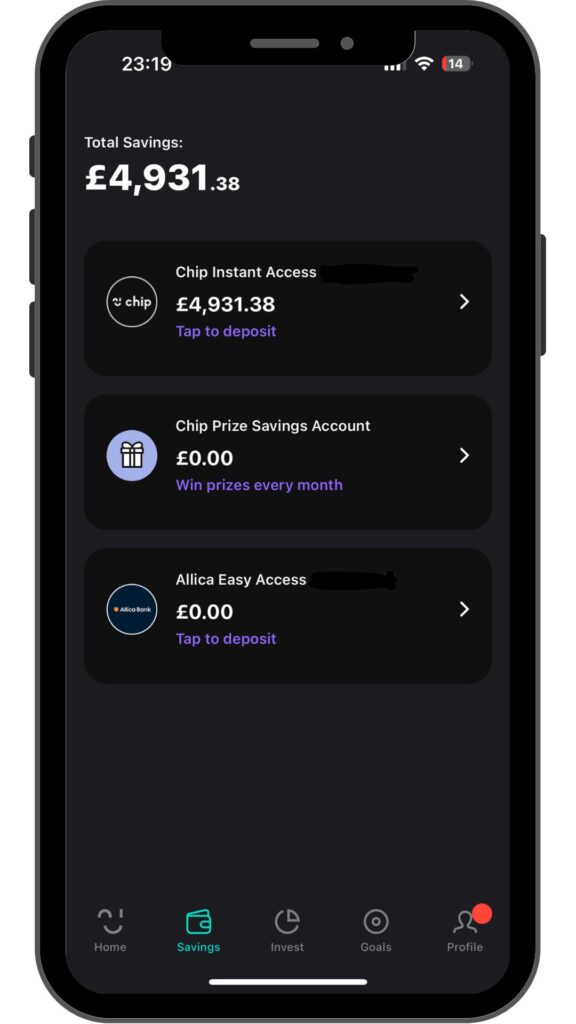
Plum’s best features sit behind monthly subscriptions. Chip, on the other hand, lets you save and earn competitive interest without paying anything. If you don’t want another monthly bill, Chip feels better value overall.
Referral schemes: which pays better?
Referral verdict: Plum
Plum’s referral offers tend to be more generous and more consistent. Chip’s referral scheme changes frequently and is often less rewarding unless large sums are involved.
Overall winner: Chip vs Plum
Overall verdict: Chip (just)
This is a close call. Plum is excellent if you struggle to save and want automation doing the work. Chip edges it overall by offering strong savings rates without locking core features behind a subscription. For most people, that simplicity makes the difference.
Choose Chip if you want:
- higher savings rates
- no monthly subscription
- a simple place to park your cash
Choose Plum if you want:
- saving automated without thinking
- behavioural nudges and rules
- more flexibility around investing (if you pay)
What about Moneybox?
If you’re also comparing Plum vs Moneybox, it helps to understand the difference.
Moneybox is investment-first. It’s especially popular for:
- Lifetime ISAs
- long-term investing
Plum is savings-first.
Moneybox is better if your main goal is investing rather than building a saving habit.
I’ve broken that comparison down properly in my Plum vs Moneybox post.
Want more detail?
If you want a deep dive into either app:
- Read my full Plum app review
- Read my full Chip review
- Or compare more options in my best budgeting apps guide