Is It Cheaper to Leave Heating On All the Time?
Heating costs have become one of the biggest expenses in many UK homes, so it’s no surprise people are constantly looking for ways to cut their energy bills.
One debate that seems to come up every winter is whether it’s cheaper to leave your heating on all the time, or only turn it on when you need it.
If you’ve ever looked this up online, you’ve probably seen strong opinions on both sides. Some people insist that leaving heating on low all day saves money. Others say that’s complete nonsense.
So who’s right?
Quick answer
In most homes, it’s cheaper to turn your heating on only when you need it rather than leaving it on constantly.
That’s because heat naturally escapes from your home whenever the inside temperature is warmer than outside. If your heating is running all day, your home will continuously lose heat – meaning your boiler has to keep replacing that lost energy.
Using heating only when needed normally reduces overall heat loss and lowers your energy use.
Why people think leaving heating on saves money
The idea that constant heating is cheaper usually comes from the belief that boilers work harder when heating a cold house.
The theory goes like this:
👉 If you turn the heating off, your house gets cold
👉 The boiler then has to work extra hard to warm it up again
👉 That burst of heating supposedly uses more energy
Because of this, some people keep their thermostat set to a low temperature all day so the heating system is always ticking over.
It sounds logical at first, but when you look at how heat loss actually works, the picture changes.
The science behind heating your home
The key concept here is heat loss.
Whenever the inside of your home is warmer than outside, heat naturally escapes through things like:
• walls
• windows
• roofs
• doors
• floors
The bigger the temperature difference, the faster heat escapes.
Heating on all day vs heating when needed
Heating method | Energy use | Why |
|---|---|---|
Heating on all day | Higher | The home constantly loses heat |
Heating only when needed | Lower | Heat loss slows as the house cools |
For example:
If your house is 20°C inside and 5°C outside, heat loss is quite high.
If the house cools down to 15°C, the difference between inside and outside temperatures is smaller, so heat escapes more slowly.
This means that keeping your home warm all day usually increases the total amount of heat lost, which your heating system then has to replace.
What energy experts recommend
Most energy experts agree that leaving heating on constantly is rarely the most efficient option.
The Energy Saving Trust recommends using heating controls so your home is only heated when needed.
Similarly, uSwitch advises programming your heating to come on at the times you actually use the house, such as mornings and evenings.
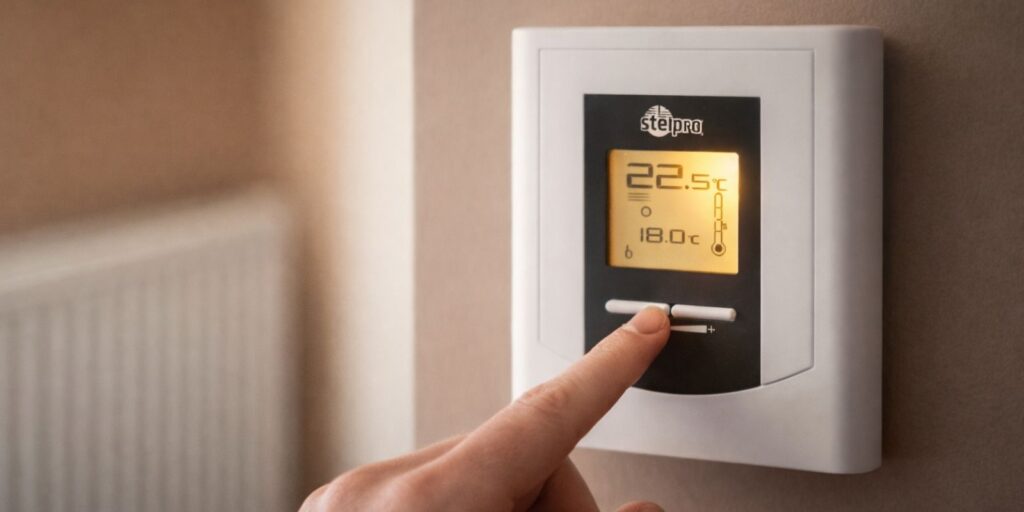
This is exactly what thermostats, timers and smart heating controls are designed for.
Don’t let your home get too cold
While heating only when needed is usually cheaper, you also don’t want your house becoming extremely cold.
Very cold walls can increase the risk of condensation and mould, especially in older UK homes.
Many experts recommend keeping indoor temperatures above around 14–15°C where possible to help prevent damp issues.
If condensation is a problem in your home, it’s also worth looking at simple fixes like bubble wrap on windows, which can help reduce heat loss through glass.
What about heat pumps?
It’s worth mentioning that this advice mainly applies to homes using gas boilers or electric heating systems.
Homes with air source heat pumps often operate differently. Heat pumps are typically most efficient when maintaining a steady temperature rather than heating a home from cold.
If you have a heat pump system, the best approach is usually to follow the guidance from your installer.
What I personally do
After looking into this myself, I follow the same approach recommended by energy experts.
I use a smart thermostat and have the heating come on during the morning and evening when the house is actually being used.
During the day, if nobody is home, the heating stays off.
It keeps the house comfortable when we need it, but avoids heating empty rooms for hours.
Other ways to reduce your heating bills
If you’re trying to cut heating costs, there are several small changes that can make a noticeable difference.
You might want to look at the cheapest ways to heat a room, which covers a number of alternatives that can cost less than running central heating all day.
If you’re drying clothes indoors during winter, switching to some tumble dryer alternatives can also help reduce moisture and energy use.
And if you have a hot water cylinder, you might also want to read is it cheaper to leave your hot water on constant, which looks at whether running your water heating all day wastes energy.
Small changes like these can add up over the course of a winter.
So, is it cheaper to leave heating on all the time?
For most households, no.
Leaving heating on constantly usually means your home is losing heat for longer periods, forcing your heating system to keep replacing that lost energy.
Using timers or thermostats to heat your home only when you need it is normally the more energy-efficient option.
If you’re unsure what works best for your home, you could always experiment for a week or two and compare your energy usage.
But in most cases, heating empty rooms all day simply means paying to warm a house that nobody is using.
Further reading
If you’re looking for more ways to cut energy costs at home, you might also want to read how to reduce your heating bills by 40%.
FAQ
Is it cheaper to leave heating on low all day?
Usually not. Leaving heating on all day means your home constantly loses heat, which your boiler has to replace. Heating only when needed normally uses less energy.
Does turning heating on and off waste energy?
No. While heating a cold house does require energy, the total heat loss over time is usually lower than keeping your home warm constantly.
What temperature should you keep your house in winter?
Many experts recommend around 18–21°C when rooms are occupied, with lower temperatures overnight or when the house is empty.
Do smart thermostats save money?
Yes. Smart thermostats can automatically adjust heating schedules and avoid heating empty homes, which can help reduce energy use.