
Are Solar Panels Worth It? My Real Returns Since Installation
Thinking about installing solar panels? I took the plunge and fitted them on my own home, my most expensive money-saving experiment yet. Here’s exactly how much I’ve saved, the unexpected costs (yes, pigeons are involved…), and whether I think solar panels are worth it.
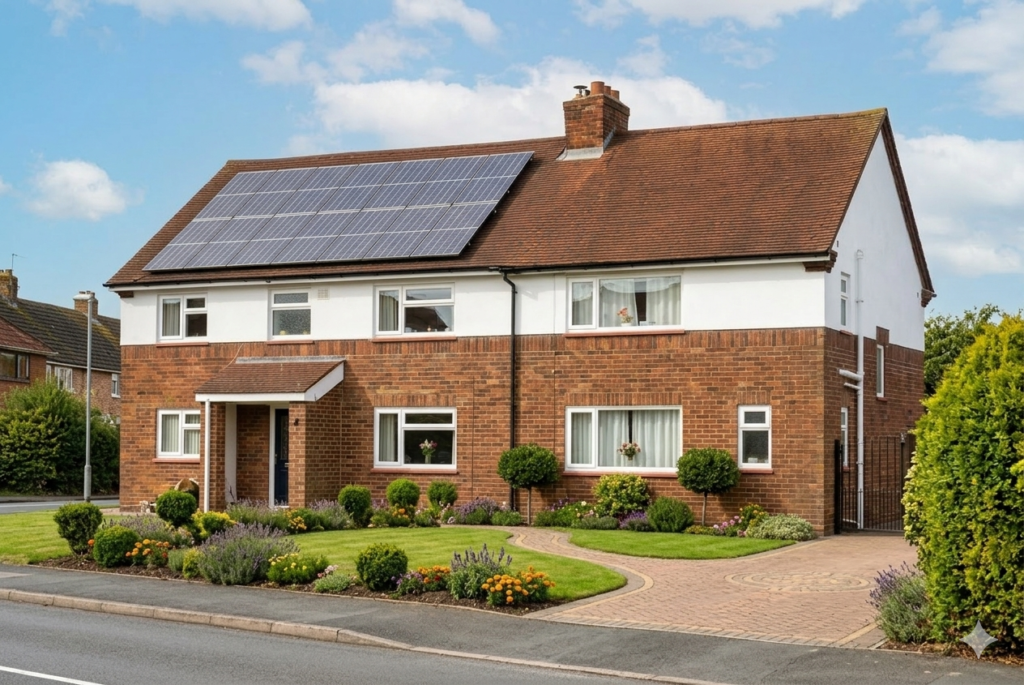
I’ve always loved cutting my bills. It frees up more cash for the fun things in life (mainly alcohol). But apart from my mortgage, my energy bill is one of my biggest costs.
I’d already done the basics: LED bulbs, cavity wall insulation, and even a test where I only heated water for a couple of hours each day. The savings weren’t huge. So, I looked at something more drastic: solar PV panels.
How do solar panels work?
Photovoltaic (PV) panels convert the sun’s rays into electricity. Instead of your house drawing power solely from the National Grid, it can run (at least partly) from the energy generated on your roof.
Do solar panels work in winter?
Yes, they don’t need direct sunlight, so they still generate electricity on dull days. However, shorter daylight hours in winter mean less generation compared to long summer days.
Also worth reading
If you find your energy usage too high, look at these simple ways to reduce your heating bills.
How much do solar panels cost in the UK?
The cost depends on roof size, number of panels, ease of installation, and whether you want a battery. As of 2025, the average UK system costs £4,000–£7,000. My quotes fell neatly in this range.
Can every roof take solar panels?
Things to check before installing:
- Roof size – the bigger the roof, the more panels you can fit.
- Loft space – you’ll need room for an inverter (slightly bigger than a microwave).
- Roof strength – panels are heavy, so your roof needs to be sound.
- Pitch – works between 10–60°, though 35–40° is most efficient.
- Direction – south-facing roofs generate the most, but east and west still give decent returns. A shaded or north-facing roof usually isn’t worth it.
Most installers will do a free site survey and let you know if your home is suitable.
Do you need planning permission?
Generally, no. Panels are considered “permitted development.” Exceptions apply to listed buildings or conservation areas. If in doubt, check with your local council.
Do solar panels need cleaning?
Not often. With the UK’s rain, mine have stayed clean, and most panels come with a 25-year warranty. If dirt builds up, you can hire a professional cleaner, but I’ve not needed to.
Also worth reading
Why not visit my post about the best energy-saving devices?
Can you sell electricity back to the grid?
The old Feed-in Tariff (FIT) closed in 2019. New installations now use the Smart Export Guarantee (SEG), where energy suppliers pay you for what you export. Octopus Energy’s Outgoing Octopus tariff is one of the most popular. And not only that, switching to Octopus will earn you £50.
Solar panels and smart meters
If you have a smart meter installed, you may wonder how it works once solar panels are fitted. Well, it really won’t have much of an impact. The meter will still read how much electricity you import from your supplier, but it won’t tell you how much energy you give back to the grid.
My solar installation quotes
- IKEA – 7 panels (1.89 kWp), £4,325. Looked cheap, but underpowered. At peak, they could only generate about half the energy to boil a kettle. (IKEA no longer offer quotes).
- Local installer – 15 panels (4.5 kWp), £5,995.41. More expensive but far more efficient.
I went with the local company, they were flexible, provided better service, and the output increase made the extra cost worthwhile.
Installation experience
The whole job took just over a day, with scaffolding up for a week. An inverter was fitted in the loft, and a small monitoring box was placed in a kitchen cupboard. Other than the roof panels, you wouldn’t notice anything had changed.

Are solar batteries worth it?
One of the big debates when installing solar panels is whether to add a battery. A solar battery stores excess electricity generated during the day so you can use it in the evening (when most households use more power).
The costs
Battery prices vary, but here’s a rough guide:
- Small battery (3–5 kWh): £1,200–£2,500
- Mid-size battery (6–10 kWh): £3,000–£5,000
- Large battery (10kWh+): £5,000–£6,000+
They usually come with a 10-year warranty, though the lifespan depends on usage cycles.
The savings without a battery
If you don’t have a battery, any electricity you don’t use instantly goes back to the grid. Under the Smart Export Guarantee (SEG), your supplier will pay you per kWh exported. Octopus, for example, currently pays around 15p per kWh on its Outgoing Agile tariff (rates vary).
That’s great, but you’re still buying back electricity from the grid in the evening at 25–30p per kWh.
The savings with a battery
With a battery, instead of exporting excess daytime energy, you store it and use it in the evening. That means less buying back at peak rates.
For example:
- Panels generate 10 kWh during the day.
- Household uses 6 kWh during the day.
- 4 kWh left over – without a battery, this is exported at ~15p/kWh = 60p earned.
- With a battery, you use that 4 kWh in the evening instead, avoiding buying it at 28p/kWh = £1.12 saved.
So in this case, the battery gives you almost double the benefit.
The Economy 7 trick
Here’s where it gets clever. If you’re on an Economy 7 or time-of-use tariff, you can also charge your battery overnight with cheap electricity (say 9–12p/kWh). Then you use it during the day when rates are 25–30p/kWh – or even export it back at 15p/kWh.
Example:
- Charge 6 kWh overnight at 10p/kWh = 60p cost.
- Use that 6 kWh in the daytime instead of buying at 28p/kWh = £1.68 saved.
- Net benefit = £1.08 per cycle.
- Over 300 days a year = £324 saved just from tariff shifting.
Add that to the normal solar benefits, and the payback time for a battery could shrink from 12–15 years down to 7–9 years, depending on usage.
Is a battery worth it for me?
For us, no. My wife is a childminder, so our daytime use is high, meaning we naturally use the power as it’s generated. But if your home is empty all day, or you’re happy to play the tariff-switching game with Economy 7, a battery could make a lot of sense.
My energy savings and usage figures
Here’s my electricity usage before and after solar panels (calculated at 14.37p/kWh – yes, this was some time ago):
Without solar (kWh) | Cost (£) | With solar (kWh) | Cost (£) | |
November | 304 | £43.68 | 184 | £26.44 |
December | 310 | £44.55 | 254 | £36.50 |
January | 322 | £46.27 | 268 | £38.51 |
February | 339 | £48.71 | 218 | £31.32 |
March | 290 | £41.67 | 200 | £28.74 |
April | 301 | £43.25 | 163 | £23.42 |
May | 313 | £44.98 | 123 | £17.68 |
June | 260 | £37.36 | 102 | £14.65 |
July | 245 | £35.21 | 115 | £16.53 |
August | 263 | £37.79 | 153 | £21.99 |
September | 252 | £36.21 | 147 | £21.12 |
October | 265 | £38.08 | 178 | £25.58 |
Total | 3,464 | £497.96 | 2,105 | £302.48 |
- Savings on bills: £195.48
- FIT payments received: £257.96
- Total first-year benefit: £453.44
Originally, I thought payback would take 12 years. Thanks to rising energy costs, I now expect to recoup my investment within 9 years.
The hidden cost: pigeons
Six months after installation, our roof became a pigeon playground. At one point, it sounded like thousands of little feet marching overhead, and broken eggs splattering on the car in summer heat was not pleasant.
The solution? Mesh installed around the panels. Cost: £500. Painful, but worth it (my neighbour was quoted £1,800). My advice: ask your installer to pigeon-proof during installation.
So, are solar panels worth it?
For me, yes. Even without the generous old FIT scheme, the combination of bill savings, SEG payments, and rising energy costs means solar panels are paying off faster than expected. Plus, they reduce my carbon footprint.
Would I do it again? Absolutely. Though I’d have asked for bird-proofing from day one. And I would probably opt for a battery.
FAQs
Will solar panels charge on a cloudy day?
They will, although not as well as on a bright, sunny day. It is estimated that they will produce around 10-25% of their normal output.
Can solar panels work at night?
No, solar panels will not produce any energy at night. The only way for panels to power your home when it gets dark is if you invest in a battery to store energy produced during the day.
Can solar panels be fitted to a flat roof?
They can, as long as the roof can hold the weight. However, it is recommended that the panels are tilted slightly.
Are solar panels expensive to run
Once installed, there should be very few costs. You may need to pay for cleaning if the panels become too dirty or repair costs if something should go wrong.
How much does a solar battery cost?
Smaller batteries start from £1,200 and can rise to as much as £6,000.



So I’ve just sent you an Octopus Referral. I’m switching from E.ON Next after they’ve just informed me my standing charge is going from 24.112p/day to 43.394p/day on April 1st. Since I’ve also got ‘Photovoltaics’ – incidentally you spelt it wrong in your article – and like you my Electricity use is minimal during summer, I’m essentially going to be paying them lots for ‘not a lot’!
I would recommend – if you’ve not done it yet – buying something like ‘Immersun’ which uses excess energy over summer and Pulses it into the Hot Water tanks emersion heater. Basically any excess energy even tens of milliamps can be fired into the tank to heat the water up – we don’t use our boiler at all for at least 6 months a year, reducing our Gas bill significantly!
Keep up the good work.
Thanks Kevin. I’ve updated the spelling and not sure how that got in there as it’s not even a word! The Immersun looks like a good idea and I’ll have to look into it. I know that during the summer we produce a lot of excess electricity, so this could be very useful.
Excellent practical review. I’ve been looking at various websites and they’ve all fallen into one of two catergories:
1 Quasi selling sites
2 Technical mumbo jumbo That would require a PhD to understand.
Your reality based analysis is a refreshing change. I also looked at some of your other content and whilst I do not always agree with your conclusions you do clearly show your reasoning (e.g. Premium Savings Bonds). The difference in conclusion is only because circumstances are not always similar to yours.