Simple and Cheap Ways to Stop Condensation on Windows
If winter mornings weren’t miserable enough already, there’s that moment you open the curtains and see the windows dripping. Again.
I used to come home from night shifts, pull the curtains back and feel my mood drop instantly. Every pane soaked. Sills wet. 15–20 minutes with a cloth before I’d even had a coffee. It felt normal at the time. It isn’t.
If you’re searching how to get rid of condensation on windows, you’re not alone. It’s one of the most common cold-weather problems in UK homes. The good news? You don’t need new windows or a full renovation. Most condensation can be reduced cheaply with a few practical changes.
Here’s what actually works.

Why do windows get condensation?
Condensation happens when warm, moist air hits a cold surface. In winter, windows are usually the coldest part of your house, even if you have double glazing.
Modern UK homes are built (or upgraded) to keep heat in. That’s great for energy bills, but it also traps moisture. And we create more moisture than we realise:
• Showering
• Cooking
• Drying clothes indoors
• Boiling kettles
• Even breathing while we sleep
Bedrooms often have the worst condensation in the morning because you’ve been breathing into a sealed room for 6–8 hours.
As a general rule, indoor humidity should sit between 40% and 60%. Once it regularly climbs above that, window condensation and mould become far more likely.
Why you shouldn’t ignore window condensation
It’s tempting to treat condensation as just a winter annoyance. It isn’t.
Left unchecked, excess moisture can lead to black mould, peeling paint, damaged seals and rotting window frames. In severe cases, moisture can penetrate plaster and brickwork.
There’s also a health angle. According to the National Health Service, mould spores can trigger allergic reactions, breathing issues and asthma flare-ups. If you’re wiping windows every morning, the problem isn’t cosmetic. It’s a moisture imbalance in your home.
The cheapest ways to stop condensation on windows
If you just want the short answer, here’s what actually works and roughly what it costs.
Solution | Upfront Cost | Running Cost | Effectiveness | Best |
|---|---|---|---|---|
Open trickle vents | £0 | £0 | Low | Mild condensation |
Open windows daily | £0 | Higher heating costs | Medium | Short bursts of moisture |
Moisture absorbers | £3–£4 per room | £3–£4 every 6–8 weeks | Low–Medium | Single rooms |
Window vac | £40–£70 | £0 | Medium | Removing existing condensation |
Portable dehumidifier | £100–£200 | ~10–20p per hour | High | Whole-home moisture |
Extractor fans | £0–£150+ | Very low | Medium–High | Kitchens & bathrooms |
Heat pump tumble dryer | £400–£800 | Lower than vented dryers | High | Indoor clothes drying |
Steady low heating | £0 | Higher energy use | Medium | Insulated homes |
Now let’s break that down properly.
Improve ventilation (without freezing the house)
Ventilation helps moisture escape, but flinging windows wide open all day just sends heat – and money – outside.
If your windows have trickle vents, keep them open. They won’t solve a major moisture problem, but they allow steady airflow without huge heat loss. We have them fitted and while they’re not miracle workers, they do take the edge off.
Opening windows for 10–15 minutes in the morning (especially in bedrooms) can help clear overnight moisture. Just don’t leave them open all day in January unless you enjoy high heating bills.

Use a dehumidifier (the most effective fix)
If you want to properly reduce condensation on windows, a dehumidifier is the strongest solution. It removes moisture from the air, tackling the root cause rather than just wiping away the symptoms.
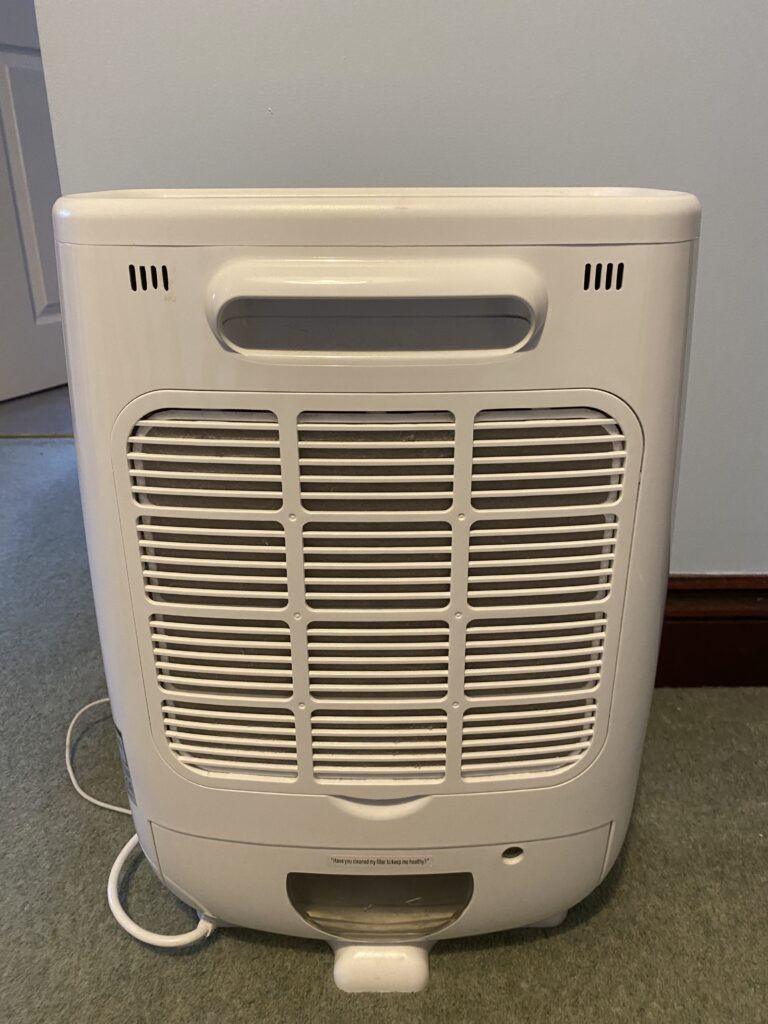
I’ve used both Meaco and PureMate models. My old Meaco lasted five years before giving up. I now use the PureMate 20L dehumidifier. It’s a little heavy, but it’s on wheels, so I can move it around. But it works well and is fairly quiet.
What to expect:
• £100–£200 upfront
• Around 10–20p per hour to run (depending on model and electricity prices)
• A water tank to empty regularly
Many models have a laundry mode, which is brilliant in winter if you dry clothes indoors.
If condensation is happening across multiple rooms, this is usually the answer.
Try moisture absorbers for small rooms
If a dehumidifier feels like overkill, moisture absorber tubs are a cheaper option.
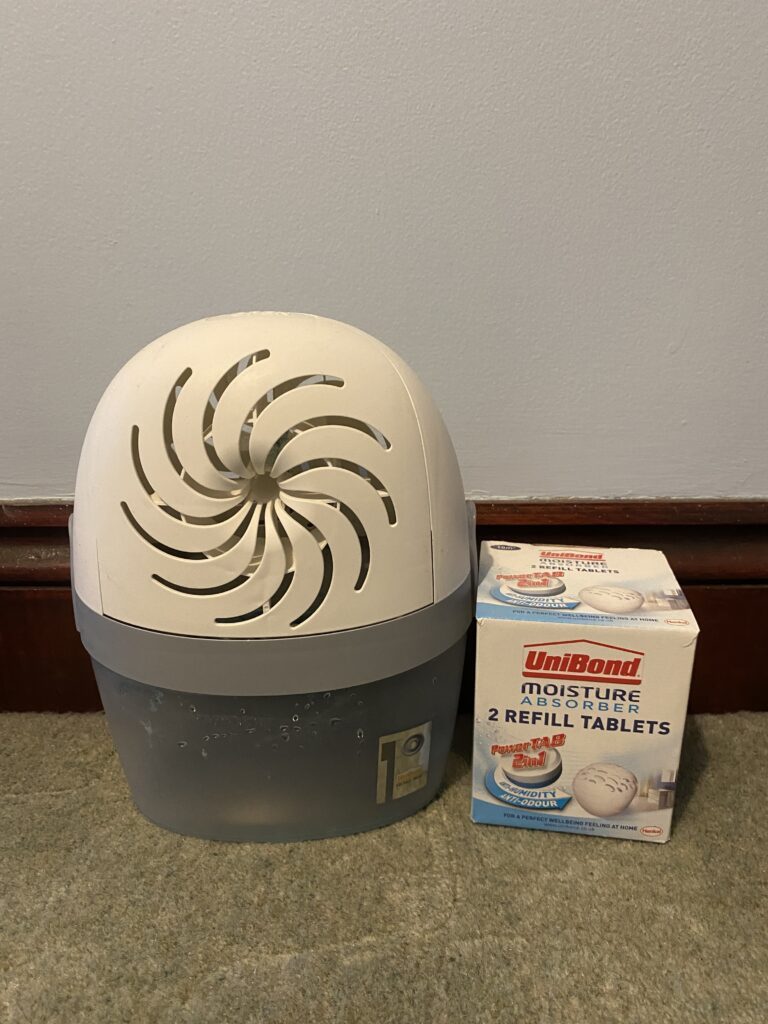
They sit on windowsills and use disposable tablets to draw in water. Each tablet lasts around 6–8 weeks and costs roughly £3–£4.
They’re not pretty. They’re not powerful. But for light bedroom condensation, they help.
One lesson from experience: don’t leave them in the bathroom. I once put one near the toilet and it somehow managed to absorb toilet water. Not my finest moment.
This is the current model we use in one of our rooms.
Avoid drying clothes indoors (if you can)
Drying washing inside is one of the biggest causes of window condensation.
If you have no choice:
• Use an extra spin cycle
• Dry clothes near a window
• Keep a door closed
• Run a dehumidifier in the same room
A heat pump tumble dryer is the best indoor option long term. They’re expensive to buy, but much cheaper to run than older vented dryers.
If you’re weighing up drying options, it’s worth comparing costs properly. I’ve broken that down here: which is cheaper – a dehumidifier or a tumble dryer?
Also worth reading
Issue drying clothes? Which is cheaper – a dehumidifier or a tumble dryer?
Keep moisture contained in kitchens and bathrooms
Most household moisture starts in the kitchen and bathroom.
When cooking or showering:
• Keep the door shut
• Use extractor fans
• Open a window briefly afterwards
Stopping steam spreading through the house makes a noticeable difference.
Keep heating steady
Constant low-level heating can reduce condensation by preventing cold surfaces forming in the first place. It works best in insulated homes.
It does increase energy use though, so it’s not always the cheapest solution. If you’re reviewing heating costs, you might also want to look at whether you should leave your hot water on constant.
Also worth reading
Check out these handy tips for drying your clothes in the winter.
What About Bubble Wrap on Windows?
You might have seen people sticking bubble wrap directly onto their windows in winter.
Yes, it can help — but it’s important to understand what it’s doing.
Bubble wrap doesn’t remove moisture from the air. It simply insulates the glass slightly, which can reduce how cold the surface gets. Warmer glass means less visible condensation forming on the pane.
It can be useful if:
• You have single glazing
• You’ve got older double glazing
• One particular room always feels colder
But it’s not a fix for high humidity. If the air in your home is damp, condensation will just appear somewhere else — frames, walls, ceilings.
I’ve explained exactly how it works (and when it’s worth doing) in my guide to bubble wrap on windows and condensation.
Think of it as a comfort tweak, not a moisture solution.
Remove condensation properly
Even with everything set up well, you’ll still get the occasional bad morning.
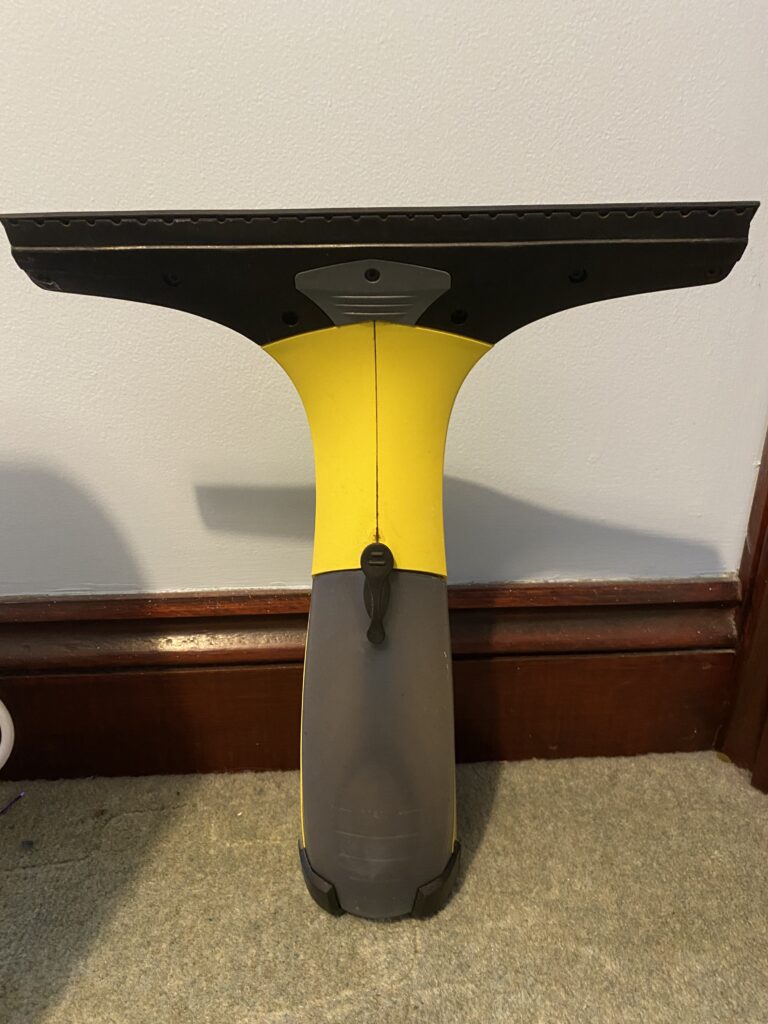
Cloths work, but they’re annoying. I switched to a Kärcher window vac and wouldn’t go back. It clears a full window in seconds and empties straight into the sink. It also doubles as a window cleaner, so it’s not a one-trick pony.
It doesn’t fix humidity, but it makes dealing with it far quicker.
What’s the best way to stop condensation on windows?
If you want the most effective overall solution, a dehumidifier wins. It reduces humidity across your home and prevents mould forming.
In our house, the combination works best:
• Dehumidifier for general moisture
• A moisture absorber in one awkward room
• A window vac for the odd cold snap
Since doing that, mould has completely disappeared.
Condensation won’t solve itself. If you ignore it long enough, mould follows. And that’s a bigger, more expensive problem.
If you’re trying to cut costs around the house this winter, tackling condensation properly can protect your home and avoid bigger repair bills later.
How to tackle mould
Condensation forming on the uPVC will eventually migrate to the wall and sill, causing black mould. If this happens, use something like HG Mould Remover and a preventer spray to stop it from returning.
Then, if you can afford it, a dehumidifier will really help. Take a look at my post on dehumidifier running costs to find out more.
Further reading
Why not look to see whether you should leave your hot water on constant.
FAQs
How do you stop condensation on windows overnight?
The best way to stop condensation on windows overnight is to reduce humidity before you go to bed.
Try:
• Running a dehumidifier for a few hours in the evening
• Opening bedroom windows for 10–15 minutes before sleeping
• Keeping trickle vents open
• Avoiding drying clothes indoors
Bedrooms are usually the worst because we breathe out moisture all night in a closed room. If morning condensation is heavy, a dehumidifier is usually the most reliable fix.
How do you stop condensation on bedroom windows?
To stop condensation on bedroom windows, focus on airflow and humidity control.
Keep internal doors open during the day, use extractor fans in bathrooms before bedtime, and avoid drying washing near bedrooms. If the issue continues, a small dehumidifier in the bedroom can make a big difference.
What is the cheapest way to stop condensation on windows?
The cheapest way to stop condensation on windows is improving ventilation.
Opening windows briefly each morning costs nothing (aside from a little heat loss). Trickle vents should always be left open. Moisture absorber tubs are also inexpensive at around £3–£4 per room and can help with light condensation.
If condensation is severe, cheap fixes alone usually won’t solve it.
Do window condensation absorbers actually work?
Yes — but only for mild moisture problems.
Window condensation absorbers (the small tubs with tablets) can reduce light condensation in single rooms. They’re not powerful enough for whole-house moisture issues, but they’re useful in small bedrooms or cupboards.
If you’re emptying the tub quickly, it’s a sign you need a dehumidifier instead.
Is condensation on windows a sign of damp?
Not always.
Condensation is caused by excess indoor moisture meeting cold glass. Damp, on the other hand, usually comes from structural issues like leaks or rising moisture.
However, long-term condensation can lead to mould, which looks similar to damp. If mould keeps returning even after improving ventilation, it’s worth investigating further.
Why is condensation worse in winter?
Windows are much colder in winter, so warm indoor air turns into water droplets more easily.
We also ventilate less in cold weather and dry more clothes indoors, which increases humidity. That combination makes winter condensation far more common in UK homes.
If you’d like, I can also tighten the intro slightly so it flows straight into this FAQ section more naturally.