What Is the Best Time to Get Reduced Food at Supermarkets?
If you’ve ever been told “just go at 7pm” and walked away with nothing but a sad loaf of bread for 20p, you already know the truth:
There is no single best time to get yellow-sticker bargains.
Supermarkets don’t all reduce food at the same time. Many don’t even follow a strict schedule anymore. Staff workload, how busy the store is, and automated stock systems all play a part.
That said, there are patterns, and once you understand how reductions actually work, you can massively improve your chances.
This guide pulls together:
- What supermarket staff say
- What shoppers repeatedly report on forums
- What the media claims (and where it oversimplifies)
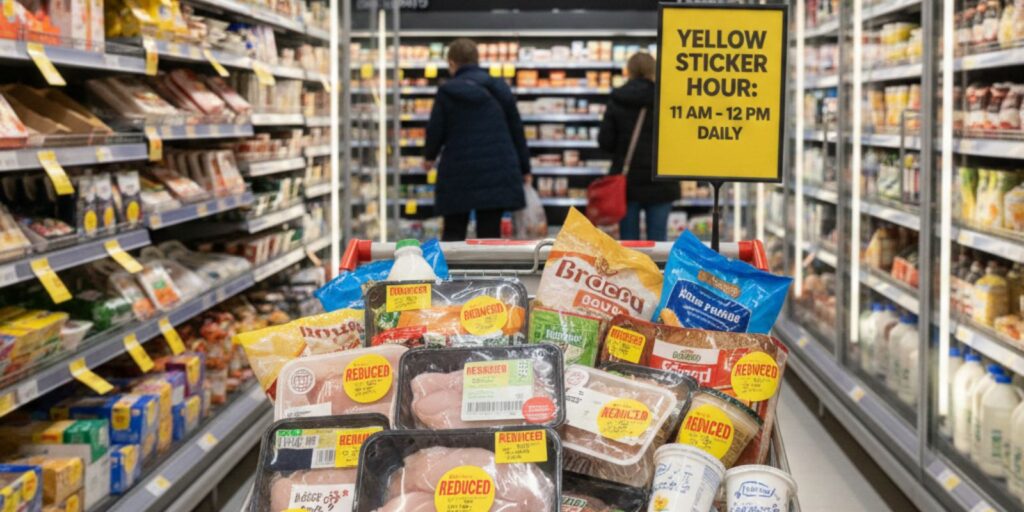
Typical times for yellow sticker reductions (UK supermarkets)
Supermarket | First reductions often appear | Best time for biggest reductions | Notes |
|---|---|---|---|
Morning to early afternoon | Evening (often after 6:30pm) | Large stores tend to go later than Express | |
Early afternoon | Evening (often after 7pm) | Meat and ready meals often go later | |
Late morning or afternoon | Evening (around 6–7pm) | Often one main evening reduction | |
Late morning | Early evening (5–7pm) | Fresh counters can be gold | |
Morning or afternoon | Late afternoon / early evening | Very store-dependent | |
Morning | Mid-to-late afternoon | Some stores reduce meat around 4pm | |
Early to mid-afternoon | Late afternoon / close | Food-to-go often reduced earlier |
How supermarket reductions actually work
Most supermarkets now operate a two-stage reduction system:
- Early reductions
Smaller discounts (often 10–30%) earlier in the day to test demand. - Final reductions
Much deeper cuts (50–90%) later in the day to clear stock before it expires.
However, and this is the key point, staff don’t reduce food if it means getting mobbed. Many former employees say they wait until the store is quiet enough to work without being surrounded.
That’s why timing varies so much by location.
Typical yellow-sticker times by supermarket (UK)
These are commonly reported windows, not guarantees. Use them as a starting point, then learn your local store’s rhythm.
Tesco
Tesco stores often reduce in waves.
- Small markdowns can appear in the morning
- Bigger reductions usually happen in the evening
- Large stores tend to go later than Express branches
Best time to try:
6:30pm to closing, plus a quick mid-morning check if you’re nearby
Sainsbury’s
Sainsbury’s varies heavily by store.
- Early reductions are often reported from early afternoon
- Bigger meat and ready-meal reductions tend to appear later in the evening
Best time to try:
7pm onwards, then adjust after a few visits
Asda
Asda is often described as doing one main evening reduction.
- Shoppers regularly report large cuts appearing suddenly
- Some stores also reduce earlier, but evening is usually stronger
Best time to try:
6:30pm to close
Morrisons
Morrisons is very staff-dependent.
- Some reductions appear earlier in the day
- The biggest cuts are usually reported early evening
- Fresh counters (meat, fish, deli) are often where the best deals appear
Best time to try:
5pm to 7pm
Aldi
Aldi is less predictable.
- Some stores reduce earlier in the day
- Others wait until it’s quieter
- Reductions depend heavily on staffing and stock levels
Best time to try:
Late afternoon on weekdays — then test mornings to compare
Lidl
Lidl is one of the few chains where shoppers often report more consistent patterns.
- Meat reductions are frequently mentioned around mid-afternoon
- Some stores also reduce earlier in the morning
Best time to try:
Around 4pm, with an earlier visit to compare
Marks & Spencer
Marks & Spencer often reduces earlier than other supermarkets.
- Some reductions appear from mid-afternoon
- Bigger cuts usually happen closer to closing
- Sandwiches and “food on the move” often go earlier
Best time to try:
After 2pm, then again 30–60 minutes before closing
The approach that actually works
This matters more than the time on the clock.
Go midweek, not weekends
Tuesday to Thursday consistently beats Saturdays. Fewer shoppers, less competition, more unsold stock.
Learn when your store goes quiet
Reductions often happen when staff can work uninterrupted, not at a fixed time.
Check smaller stores
Tesco Express and local convenience stores can be surprisingly good because fewer people hunt reductions there.
Be friendly
It sounds obvious, but shoppers who consistently find bargains often do because staff give them subtle hints.
Don’t rely on yellow stickers alone
Reduced food is unpredictable by nature. That’s why I always treat it as one part of a wider strategy, not the whole plan.
When shelves are empty, I fall back on:
That way, I’m not relying on luck to feed the family cheaply.
So… what is the best time to get reduced food?
There isn’t one universal answer.
But in most UK supermarkets, your best chances are:
- Late afternoon into evening
- Midweek rather than weekends
- When the store is quiet enough for staff to work
Learn your local pattern, stack it with cashback and surplus-food apps, and yellow-sticker shopping stops being roulette and starts being reliable.
Don’t forget to use a supermarket loyalty card to maximise your returns. Most supermarkets have them, even if they’re not always well publicised.
Further reading
Saving money isn’t just about yellow stickers. Check out the best ways to reduce the cost of your food shopping.
Frequently asked questions about yellow sticker reductions
Is there a set time supermarkets reduce food?
No. While there are typical reduction windows, most supermarkets don’t follow a guaranteed schedule. Staffing levels, how busy the store is, and how much stock needs clearing all affect when reductions actually happen.
Is evening always the best time for yellow sticker bargains?
Often, but not always. Many stores make their biggest reductions in the evening, but some reduce earlier, especially if they’re quiet or overstocked. That’s why midweek evenings usually work better than weekends.
Why do I never find reduced food?
The most common reasons are:
You’re going at peak times when others are waiting
You’re shopping at the same time every day
Your local store reduces later than you expect
Try changing the day, not just the time.
Are weekends bad for yellow sticker shopping?
Usually, yes. Weekends are busier, shelves turn over faster, and regular bargain hunters often clear reductions quickly. Tuesday to Thursday consistently offers better odds.
Do smaller stores have better reductions?
Sometimes. Smaller convenience stores (like Tesco Express) can be surprisingly good because fewer people hunt for reductions there, but quantities are smaller and timing varies.
Is reduced meat safe to buy?
Yes, as long as it’s within its use-by date and stored properly. If you’re not eating it that day, freeze it immediately.
What if there’s nothing reduced when I go?
That’s normal. Reduced food is unpredictable. That’s why it’s best treated as a bonus, not a strategy you rely on alone. Cashback apps, loyalty schemes and surplus-food apps are far more consistent fallbacks.