Better Off, Better You Part 1: Setting Your Budget For 2025
What better way to start a new year than to get your finances in order? Imagine the relief you’ll feel when you can stop worrying about money and concentrate on other parts of your life. And although it may seem like a daunting task, it’s something that anybody can do. You may even enjoy it.
The last few years have seen businesses and individuals acknowledging the problems around mental health. And although we still have some way to go, we are edging closer to a more understanding society. Even so, any issue with your mental health can have an impact on your whole life.
We all have different triggers, but it was my finances for me. Trying to figure out how to cover my debts, keep a roof over my head and provide for my family kept me awake most nights.
It took me several years, but I hope the guide I have written will be of some help. You can use as much or as little as you like. It’s not about saying that you can only be happy if you have lots of money (although I’m sure it could cheer us up), but taking some of the worries out of your life.
Better Off, Better You will take you through some simple steps to help make sure that your day-to-day finances are in order. We’ll ensure you get the best deals from your providers and how you switch. In some cases, a simple switch could save you several hundred pounds, whilst a few pounds per month in others. And although saving a few pounds here and there may sound a little underwhelming, it soon adds up and can save you £100s, if not £1,000s every year.
Once your bills have been cut, we’ll look at some lifestyle changes. These can be fairly minor but can also go a long way to saving you even more money.
And finally, I’ll share some ideas of ways you can earn extra, either on a part-time basis or as a full-time income. I’m sure I don’t need to tell you that even a small income can change your life.
So, without further ado, let’s get started.
Step one – how much do you spend each month?
The first thing we need to do is probably the most boring part, but money isn’t always fun. However, it’s vital to start you off on the right foot.
With so many financial providers now available in the UK, many have multiple accounts across different companies. And although that means we get better value, it makes it quite tough to see what we have coming in and going out each month.
And until we know all this, we’re fighting a losing battle. But how do you really figure out how your accounts look?
Well, there are several ways you can do this; it depends on what you’re most comfortable with.
- Start a spreadsheet. If you have a decent knowledge of computers, then this should be quite easy. If you’re able to add formulas, you should easily be able to calculate your income and expenditure and copy this each month. Or, you could use this budgeting spreadsheet I’ve created.
- Pen and paper. Not all of us (myself included) are particularly good at creating spreadsheets. If it has more than two columns, I quickly become confused. If that’s the case, you might be better off just writing everything down. Of course, it’s a bit of a slower process and you will need to make your own calculations, but you don’t need to be tech-savvy.
- Finance app. My favourite way to keep track of my finances is by using an app. All you need to do is download the software to your phone and then link your bank accounts through Open Banking. It usually takes a few minutes if you already have online banking online. You’ll then be given a breakdown of all the money due in and out each month. These apps also come with many other benefits, but deciding whether they’re worthwhile is up to you. Take a look at my reviews of some of the best finance apps.
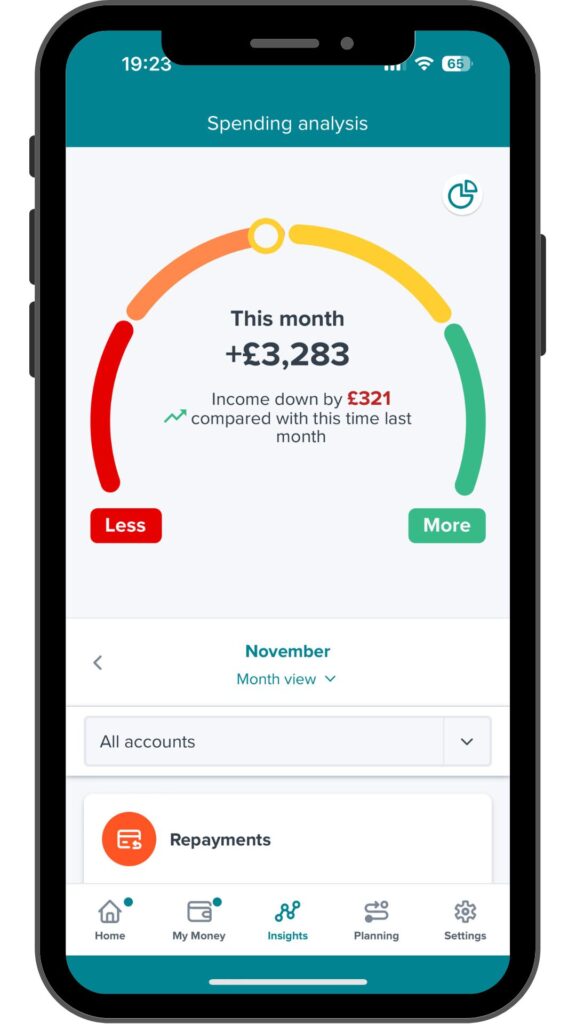
Whichever method you choose, there are a lot of bills to consider. Of course, this depends on each person’s circumstances, but here is a list of some of the most common costs.
- Mortgage/rent
- Loan repayments
- Credit card repayments
- Council tax
- Electricity
- Gas
- Oil
- Water rates
- Telephone and broadband
- Mobile phone
- TV Licence
- Satellite/Cable TV
- Groceries
- Clothing
- Petrol/diesel
- Road tax
- Car Insurance
- Car maintenance (including MOT)
- Other travel
- Childcare/nursery
- Other child-related expenses
- Medical (prescriptions, dentist etc)
- Pet costs (insurance etc)
- Buildings insurance
- Contents insurance
- Life assurance
- Gifts (birthday, Christmas etc)
- Personal care (haircuts, gym, etc)
- Entertainment
- Holiday
I know it’s a lot to take in, but set aside a couple of hours one afternoon and you should get through it. Some of these bills are more of a one-off payment. In that case, try to average it out over a year. For example, if you spend £600 on Christmas presents, this becomes £50 per month.
Once this is all worked out, you’ll then be in a great position to get total control of your finances.
Step two – how much do you earn?
Once you know how much you have going out each month, now comes the fun part. Actually, it might not be, depending on what you earn. Step two involves totalling your earnings and should be much quicker than step one.
For many, the majority of their income will come from their job. But don’t forget to include any benefits such as child benefits or working tax credits. You can also add any money you make from a side income or similar activity.
If your income is variable, take an average over the last 12 months.
Step three – compare your results
So, now it’s a case of using your total monthly income figure and taking away your monthly expenditure. You’ll then know how much disposable income you have each month.
You can then decide what to do with this money – whether to put money away for retirement, pay off debts or simply go towards a holiday.
But don’t worry for the moment if your outgoings are more than you make each month. Over the next few parts of Better Off, Better You, we’ll look at how we can improve the situation. And even if you see that you have plenty of spending money free each month, there’s always room for more.
Click here to visit part 2 and see how you can start to cut your bills.